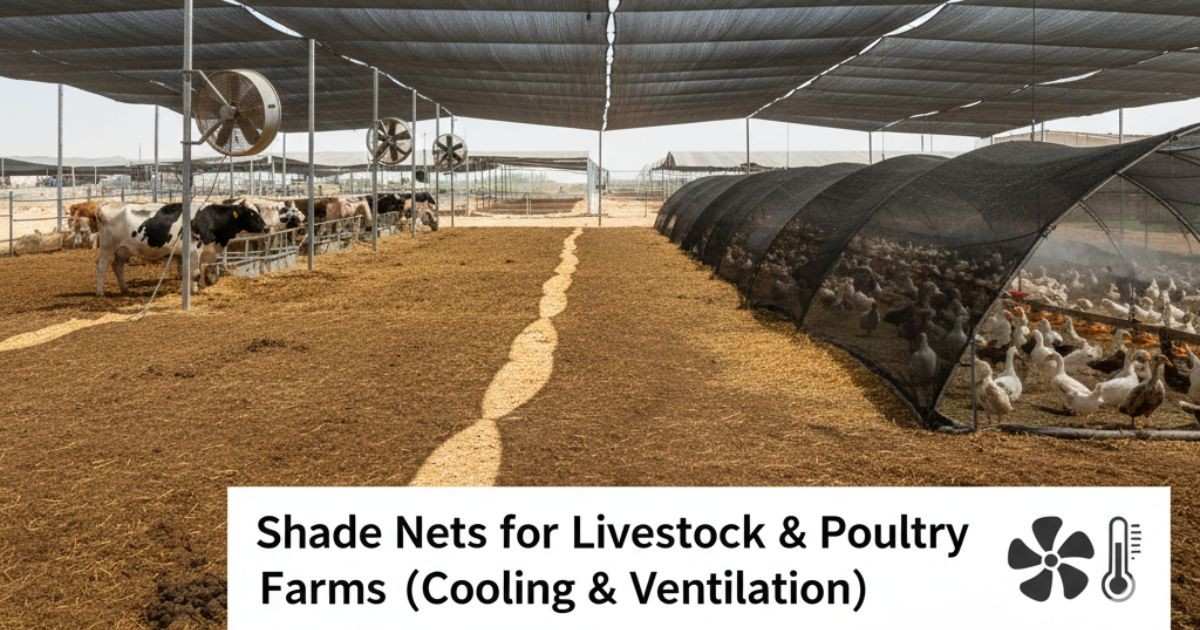
Livestock and poultry farming in the UAE faces extreme challenges due to high temperatures, intense solar radiation, and poor air circulation. Heat stress in animals directly affects feed intake, milk production, egg yield, growth rates, and overall health.
Shade nets offer a cost-effective, breathable, and efficient cooling solution for livestock sheds, poultry farms, feeding areas, and outdoor enclosures, particularly when designed for the UAE’s specific climate conditions.
This guide explains how shade nets enhance animal welfare, identifies the types that work best, and outlines the design of proper ventilation systems utilising shade netting.
Why Livestock & Poultry Farms Need Shade Nets in the UAE?
Animals are susceptible to heat stress. When temperatures exceed comfort zones:
- Feed intake drops
- Growth and milk yield decline
- Egg production decreases
- Disease susceptibility increases
- Mortality rates rise
Shade nets help regulate temperature, airflow, and solar exposure, making them essential for animal welfare in desert climates.
How Shade Nets Improve Cooling & Ventilation?
Unlike solid roofing or plastic sheets, shade nets:
- Block harmful UV radiation.
- Diffuse sunlight instead of trapping heat.
- Allow continuous airflow.
- Reduce internal shed temperatures by 5.10°C.
- Minimise ammonia buildup in poultry houses.
This creates a healthier environment without compromising ventilation.
Key Applications in Livestock & Poultry Farms
1. Shade Nets for Livestock Shelters
Used over:
- Cattle sheds
- Goat and sheep enclosures
- Camel resting areas
Benefits include:
- Reduced heat stress
- Improved feeding behaviour
- Better resting conditions
Recommended specifications:
- Shade: 70-90%
- GSM: 180-250 GSM
- Material: HDPE knitted monofilament
2. Poultry Farm Shade Netting
Shade nets are installed:
- On the side walls for ventilation
- Over roofs to reduce heat gain
- Around open-air poultry runs
Benefits:
- Maintains airflow
- Prevents heat buildup
- Reduces mortality during summer
3. Feeding & Watering Zones
Animals often avoid feeding in hot areas. Shade nets:
- Protect feed from spoilage
- Keep the water cooler
- Encourage consistent intake
4. Farm Boundary & Windbreak Fencing
Shade nets are used as:
- Windbreaks
- Dust barriers
- Visual separation
See our product: Shade Net Privacy Fencing
Best Shade Net Materials for Animal Farms
HDPE Knitted Shade Nets (Industry Standard)
Why are HDPE nets ideal?
- UV-stabilised for desert climates
- Resistant to ammonia and moisture
- Tear-resistant and flexible
- Long service life
See our product: Monofilament Knitted Shade Net
Monofilament vs Tape Yarn Nets
| Feature | Monofilament | Tape Yarn |
| Strength | High | Medium |
| Airflow | Excellent | Moderate |
| UV Stability | High | Lower |
| Lifespan | Longer | Shorter |
Monofilament nets are recommended for long-term farm use.
Choosing the Right Shade Percentage
| Area | Recommended Shade % |
| Livestock shelters | 70-90% |
| Poultry sheds | 60-80% |
| Feeding areas | 80% |
| Open paddocks | 60-70% |
Read also: How to Choose the Right Shade Percentage for Shade Nets?
Shade Net Colours for Animal Comfort
- White: Reflects heat, keeps sheds cooler.
- Green: Balanced shading, common in farms.
- Black: High UV blocking but retains heat.
- Beige: Reflective and visually neutral.
Read also: Shade Net Colours Explained
Installation Best Practices for Farms
- Maintain open sides for ventilation.
- Avoid full enclosure without airflow.
- Secure nets tightly to resist wind.
- Keep nets elevated to prevent animal contact.
- Design sloped roofs for water runoff.
Read also: Shade Net Installation Checklist
Common Mistakes to Avoid
- Using plastic sheets instead of breathable nets.
- Over-shading poultry houses.
- Blocking airflow completely.
- Poor anchoring in open farms.
- Ignoring UV-stability ratings.
Lifespan & Maintenance in Farm Environments
- Average lifespan: 4-7 years
- Clean dust and organic residue regularly
- Inspect after sandstorms
- Replace UV-degraded sections
Read also: How to Care for Shade Nets in Dubai?
Why Exclusive Tarps for Farm Shade Nets?
- Heavy-duty HDPE agricultural shade nets.
- Custom sizes for sheds and enclosures.
- Proven performance in the UAE heat.
- Suitable for livestock, poultry, and farms.
- UAE-wide supply and support.
Frequently Asked Questions
Can shade nets really reduce heat stress in animals?
Yes, shade nets significantly lower radiant heat and improve airflow, reducing stress and improving productivity.
What shade net is best for poultry farms in the UAE?
60-80% HDPE knitted shade nets are ideal for poultry ventilation and cooling.
Are shade nets better than metal roofing for livestock sheds?
Yes, shade nets reduce heat buildup and allow airflow, unlike metal roofing, which traps heat.
How long do livestock shade nets last in desert climates?
High-quality UV-stabilised nets last 4-7 years with proper installation.
Do shade nets block rain or airflow?
Shade nets allow airflow and partial rain penetration while blocking harsh sunlight.