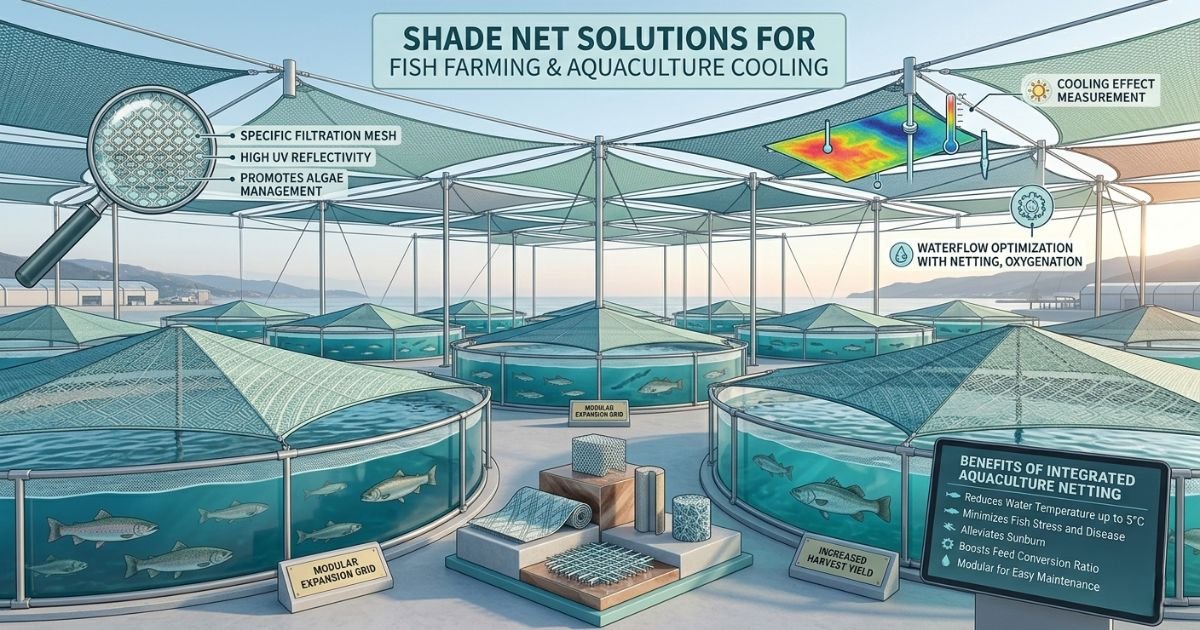
Aquaculture and fish farming in the UAE face extreme environmental challenges, including high water temperatures, intense solar radiation, rapid evaporation, and algae overgrowth. These factors directly impact fish health, oxygen levels, growth rates, and overall farm productivity.
Shade nets provide a highly effective solution by reducing solar exposure, stabilising water temperatures, and improving aquatic conditions without blocking airflow or natural light completely.
This guide explains how shade nets are used in aquaculture, the best specifications for UAE conditions, and how to design efficient cooling systems for fish farms.
Why Aquaculture Needs Shade Nets in the UAE?
Fish and aquatic species are highly sensitive to environmental conditions. In the UAE climates:
- Water temperatures can rise beyond optimal levels
- Dissolved oxygen levels drop in warm water
- Algae growth increases rapidly under sunlight
- Evaporation leads to water loss and salinity imbalance
Shade nets help regulate these factors by controlling sunlight exposure and reducing heat gain in water bodies.
How Shade Nets Improve Aquaculture Conditions?
1. Water Temperature Control
Shade nets reduce direct solar radiation, helping:
- Lower pond temperatures
- Prevent thermal stress in fish
- Maintain stable aquatic conditions
Temperature control is critical for species like tilapia, catfish, and ornamental fish.
2. Improved Oxygen Levels
Cooler water retains more dissolved oxygen, which:
- Enhances fish respiration
- Improves growth rates
- Reduces mortality
3. Algae Growth Reduction
Excess sunlight promotes algae blooms that:
- Deplete oxygen levels
- Affect water clarity
- Harm fish health
Shade nets limit light penetration, reducing uncontrolled algae growth.
4. Reduced Evaporation
Shade nets help:
- Minimise water loss
- Maintain salinity balance
- Reduce water refill costs
Key Applications of Shade Nets in Aquaculture
1. Fish Ponds & Open Water Farms
Installed above ponds to:
- Control temperature
- Protect fish from direct sunlight
2. Hatcheries & Breeding Tanks
Provide stable conditions for:
- Fish eggs
- Juvenile fish
3. Aquaculture Tanks & RAS Systems
Used in:
- Recirculating aquaculture systems
- Indoor-outdoor hybrid setups
4. Shrimp & Marine Farming
Shade nets reduce:
- Temperature fluctuations
- Water stress in shallow ponds
Best Shade Net Specifications for Fish Farming
1. Material Selection (Water-Safe & UV Resistant)
See our product: HDPE Monofilament Knitted Shade Nets
- UV-stabilised
- Resistant to moisture and chemicals
- Durable in humid environments
- Long lifespan (4-7 years)
2. Shade Percentage Selection
| Application | Recommended Shade % |
| Fish ponds | 50-75% |
| Hatcheries | 60-80% |
| Shrimp farming | 40-60% |
| Breeding tanks | 70-85% |
Too much shade can reduce natural ecosystem balance, so moderation is key.
Read also: How to Choose the Right Shade Percentage for Shade Nets in Dubai?
3. GSM Recommendations
| Use Case | Recommended GSM |
| Small ponds | 150-180 GSM |
| Large ponds | 180-220 GSM |
| Wind-exposed farms | 200-250 GSM |
Read also: GSM vs Shade Percentage
Best Shade Net Colours for Aquaculture
- Black: Maximum UV blocking, reduces algae growth
- Green: Balanced light filtration
- Blue: Used in specialised aquaculture setups
- White: Reflects heat, reduces water warming
Read also: Shade Net Colours Explained
Installation Best Practices for Fish Farms
- Maintain sufficient height above water
- Ensure partial sunlight exposure (do not fully block light)
- Use strong anchoring systems
- Allow airflow to prevent humidity buildup
- Design removable systems for maintenance
Read also: Shade Nets Installation Checklist
Common Mistakes in Aquaculture Shade Net Usage
- Over-shading ponds (affects ecosystem balance)
- Using low-quality, non-UV nets
- Poor installation is causing sagging into the water
- Ignoring wind load in open farms
- Blocking airflow completely
Maintenance & Lifespan in Aquaculture Environments
- Lifespan: 4-7 years
- Clean salt and mineral deposits
- Inspect for sagging or tears
- Replace UV-degraded nets
Read also: How to Care for Shade Nets in Dubai?
Why Exclusive Tarps for Aquaculture Shade Nets?
- High-quality HDPE shade nets
- Designed for UAE environmental conditions
- Custom sizing for ponds and tanks
- Durable, UV-stabilised materials
- UAE-wide supply and support
Frequently Asked Questions
Do shade nets reduce water temperature in fish ponds?
Yes, they significantly reduce solar heat gain, helping maintain stable water temperatures.
What shade percentage is best for aquaculture?
Typically 50-75%, depending on species and setup.
Can shade nets prevent algae growth?
They reduce excessive sunlight, helping control algae formation.
Are shade nets safe for fish farming environments?
Yes, HDPE shade nets are non-toxic and safe for aquaculture use.
How long do aquaculture shade nets last in UAE conditions?
Usually 4-7 years with proper installation and maintenance.