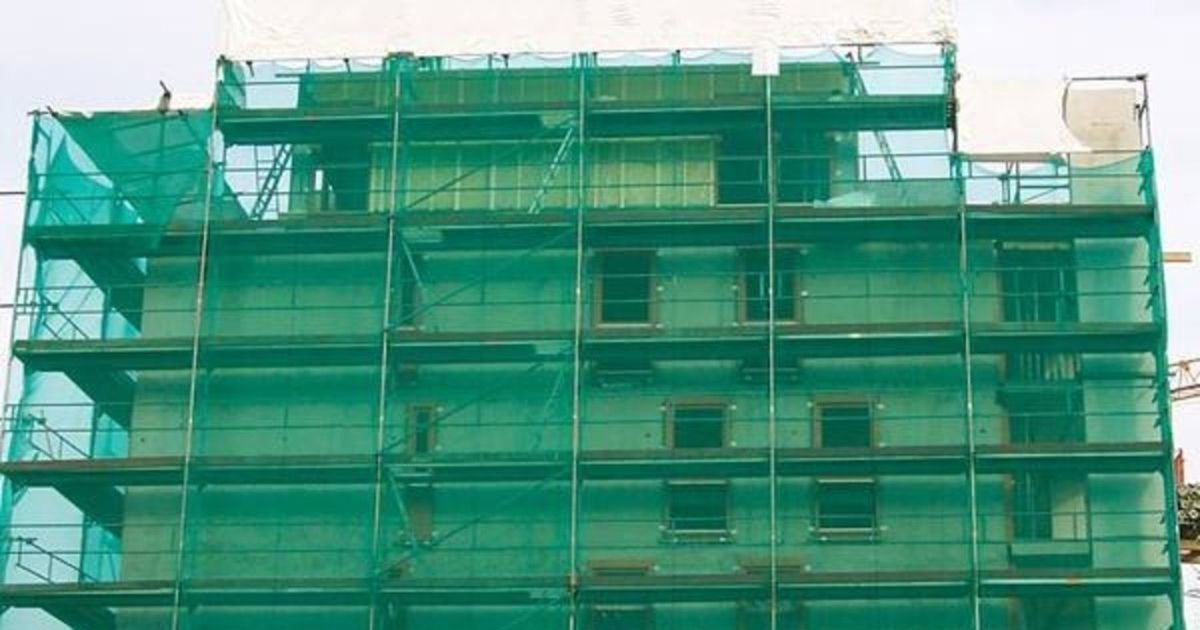
Construction sites in Dubai and across the UAE operate under extreme heat, intense UV exposure, dust storms, and strict safety regulations. From high-rise scaffolding to boundary fencing and temporary worker areas, shade nets play a critical role in worker safety, site compliance, dust control, and privacy.
This guide explains how shade nets are used on construction sites, the best specifications for UAE conditions, and how to select the right shade net for scaffolding, safety screening, and site privacy.
Why Shade Nets are Essential on UAE Construction Sites?
Construction environments face unique challenges:
- Extreme solar radiation and high UV index.
- Prolonged outdoor work hours.
- Dust, sand, and debris movement.
- Worker heat stress and fatigue.
- Visibility and privacy concerns.
- Regulatory and safety compliance.
Shade nets are used not only for cooling but also for safety screening, dust suppression, and visual barriers, making them an essential component of modern construction site planning.
Core Applications of Shade Nets on Construction Sites
1. Scaffolding Shade Nets (Primary Use)
Shade nets are commonly installed on scaffolding structures to:
- Reduce direct sun exposure for workers.
- Prevent falling debris from exiting the site.
- Act as a wind and dust barrier.
- Improve working conditions at height.
Recommended specifications:
- Shade: 70-85%
- Material: HDPE monofilament knitted
- GSM: 180-250 GSM
See our product: Monofilament Knitted Shade Cloth
2. Safety Screening & Worker Protection
Shade nets act as secondary safety layers by:
- Minimising glare
- Reducing heat stress
- Improving visibility by diffusing light
- Shielding workers from wind-borne dust
In high-rise construction, this significantly reduces fatigue-related accidents.
3. Construction Site Privacy & Visual Barriers
Urban construction sites require privacy screening to:
- Block visibility from public roads.
- Reduce complaints from nearby residents.
- Hide ongoing works for security reasons.
High-density shade nets are widely used as temporary fencing or perimeter screening.
See our product: Shade Net Privacy Fencing
4. Dust & Debris Control
Knitted shade nets help:
- Trap airborne dust
- Limit debris dispersion during demolition
- Improve air quality around the site
This is especially important in densely populated areas of Dubai and Sharjah.
5. Temporary Worker Rest & Storage Areas
Shade nets are also installed over:
- Break areas
- Material staging zones
- Equipment storage
This protects tools, reduces surface temperatures, and improves productivity.
Read also: Commercial Shade Net Buying Guide
Best Shade Net Specifications for Construction Use
1. Material Selection (Critical for Safety)
I. HDPE Monofilament Knitted Shade Nets
- High tensile strength
- Excellent UV resistance
- Minimal stretching under heat
- Strong edge integrity
Best for: Scaffolding, fencing, safety screens.
2. GSM Recommendations
| Application | Recommended GSM |
| Scaffolding | 180-250 GSM |
| Perimeter fencing | 200-280 GSM |
| Dust control | 180-220 GSM |
| High-wind zones | 250-300 GSM |
Low-GSM nets are unsafe for scaffolding use in UAE wind conditions.
3. Shade Percentage Selection
| Use Case | Ideal Shade % |
| Scaffolding | 70-85% |
| Privacy fencing | 85-95% |
| Dust control | 80-90% |
| Rest areas | 75-85% |
4. Colour Selection for Construction Sites
- Green: Industry standard, balanced visibility
- Black: Maximum privacy & dust blocking
- Grey: Neutral, professional appearance
- Beige: Better heat reflection but less privacy
Read also: Shade Net Colours Explained
Fire-Retardant Shade Nets for Construction Safety
Many construction projects require fire-retardant (FR) shade nets, especially for:
- High-rise buildings
- Temporary structures
- Public-facing construction zones
Fire-retardant nets reduce fire spread risk and help meet safety regulations.
See our product: Fire Retardant Shade Net (FR200)
Installation Best Practices on Construction Sites
Correct installation is critical for safety:
- Stainless steel cables or heavy-duty ties.
- Reinforced edges and corner patches.
- Uniform tensioning across scaffolding.
- Secure anchoring points.
- Regular inspection during the project lifecycle.
Read also: Shade Net Installation Checklist
Common Mistakes Contractors Should Avoid
- Using low-quality agricultural nets
- Ignoring GSM requirements
- Poor fixing methods
- Skipping fire-retardant compliance
- Reusing worn or UV-degraded nets
These mistakes often lead to site violations, safety risks, and frequent replacements.
Maintenance & Replacement on Active Sites
- Inspect nets weekly
- Replace torn sections immediately
- Clean excessive dust buildup
- Retighten loosened fixings
Read also: How to Care for Shade Nets?
Why Exclusive Tarps for Construction Shade Nets?
- Heavy-duty HDPE shade nets
- Fire-retardant and high-GSM options
- Custom fabrication for scaffolding dimensions
- UAE-wide supply and fast delivery
- Experience with industrial & construction projects
Frequently Asked Questions
What shade net is best for scaffolding in Dubai?
HDPE monofilament knitted shade nets with 70-85% shade and 200+ GSM.
Are shade nets mandatory on construction sites?
They are often required for safety, dust control, and privacy, especially in urban projects.
Do construction shade nets need to be fire-retardant?
Many projects require FR certification; always verify project safety guidelines.
How long do construction shade nets last in the UAE?
Typically 3-7 years, depending on GSM, UV exposure, and handling.
Can shade nets be reused after project completion?
Yes, if they remain structurally intact and UV-stable.