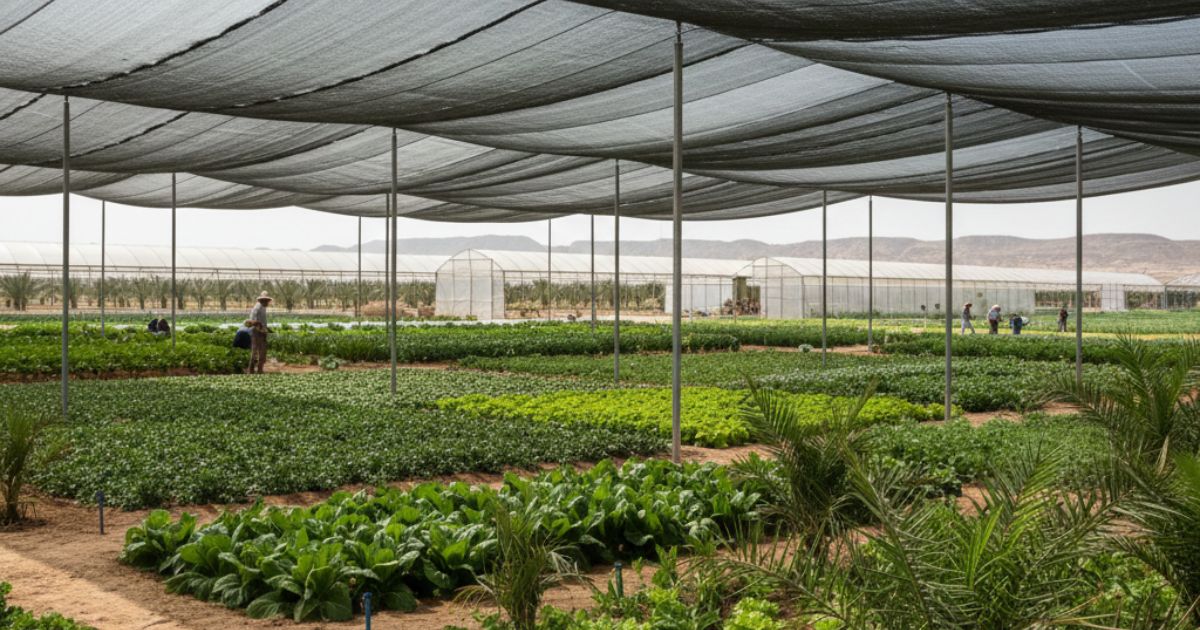
Agriculture in the UAE operates under intense sunlight, high temperatures, water stress, and harsh winds. Whether it’s open-field farming, nurseries, greenhouses, or farm fencing, shade nets play a vital role in protecting crops, improving yields, reducing heat stress, and controlling the growing environment.
This guide explains how agricultural shade nets work, which types are best for crops and nurseries, and how to choose the right shade net for UAE farming conditions.
Why Shade Nets are Essential for Agriculture in the UAE?
UAE agriculture faces challenges that directly impact plant health and productivity:
- Extreme solar radiation
- High evaporation and water loss
- Heat stress on crops
- Wind damage and sand intrusion
- Pest exposure
- Irregular rainfall
Shade nets help create a controlled microclimate, reducing temperature, diffusing light, and protecting crops without blocking airflow.
Key Agricultural Applications of Shade Nets
1. Crop Protection Shade Nets
Shade nets are used over open fields and crop rows to:
- Reduce leaf burn and sun scorch.
- Maintain optimal soil moisture.
- Improve photosynthesis through diffused light.
- Protect against wind and sand damage.
Common Crops: Vegetables, fruits, herbs, fodder crops.
Recommended Specifications:
- Shade: 30-60% (crop-dependent)
- GSM: 120-180 GSM
- Material: HDPE knitted
2. Nursery & Plant Propagation Shade Nets
Plant nurseries require precise light control to ensure healthy growth.
Shade nets help by:
- Preventing seedling dehydration.
- Reducing transplant shock.
- Improving uniform plant growth.
- Protecting young plants from UV stress.
Recommended Specifications:
- Shade: 50-75%
- GSM: 150-200 GSM
3. Greenhouse & Polytunnel Shade Netting
Shade nets are used inside or above greenhouses to:
- Control internal temperatures.
- Reduce excessive solar gain.
- Improve humidity stability.
External shading nets are preferred in the UAE climate for better airflow.
Related reading: Shade Nets for Greenhouses & Gardens
4. Farm & Agricultural Boundary Fencing
Shade nets are widely used for:
- Windbreak fencing
- Dust control
- Livestock separation
- Visual privacy
These nets allow airflow while reducing wind velocity and sand movement.
See our product: Shade Net Fence
5. Livestock & Poultry Shade Areas
Shade nets are installed over:
- Animal resting areas
- Feeding zones
- Poultry enclosures
They reduce heat stress and improve animal welfare.
Best Shade Net Materials for Agricultural Use
1. HDPE Knitted Shade Nets (Preferred)
HDPE knitted shade nets are ideal because they:
- Resist UV degradation
- Allow air circulation
- Do not unravel when cut
- Last longer in extreme heat
See our product: Monofilament Knitted Shade Cloth
2. Monofilament vs Tape Yarn Nets
| Feature | Monofilament | Tape Yarn |
| Strength | High | Medium |
| UV Stability | Excellent | Moderate |
| Airflow | Better | Moderate |
| Lifespan | Longer | Shorter |
Monofilament nets are strongly recommended for UAE farms.
Choosing the Right Shade Percentage for Crops
| Crop Type | Ideal Shade % |
| Leafy vegetables | 40-50% |
| Fruit crops | 30-40% |
| Nurseries | 50-75% |
| Ornamentals | 60-80% |
| Livestock areas | 70-85% |
Related reading: How to Choose the Right Shade Percentage for Shade Nets?
Shade Net Colours for Agricultural Use
Different colours affect plant growth:
- Green: Balanced light diffusion, most common
- White: Maximum light reflection, cooler environment
- Black: High shade, reduced light penetration
- Red: Influences flowering and yield (specialised use)
- Blue: Controls vegetative growth patterns
Related reading: Shade Net Colours Explained
Installation Best Practices for Farms & Nurseries
- Use tensioned cable systems.
- Maintain slope for rainwater runoff.
- Ensure adequate ventilation.
- Avoid sagging to prevent plant contact.
- Secure edges against wind uplift.
Related reading: Shade Net Installation Checklist
Common Agricultural Shade Net Mistakes
- Using excessive shade for sun-loving crops.
- Ignoring ventilation requirements.
- Choosing low UV-stability nets.
- Poor anchoring in open fields.
- Not adjusting shade seasonally.
Lifespan & Maintenance in UAE Conditions
- Expected lifespan: 4-7 years
- Clean dust buildup periodically
- Inspect after sandstorms
- Replace UV-degraded sections promptly
Related reading: How to Care for Shade Nets?
Why Exclusive Tarps for Agricultural Shade Nets?
- Heavy-duty HDPE agricultural nets.
- Multiple shade % and GSM options.
- Custom sizing for farms and nurseries.
- Proven performance in the UAE climate.
- UAE-wide supply and support.
Frequently Asked Questions
What shade net percentage is best for crops in the UAE?
Most crops perform well under 30-50% shade, while nurseries require higher shading.
Are shade nets better than greenhouse plastic in the UAE?
Shade nets provide better airflow and reduce heat buildup, making them ideal for hot climates.
How long do agricultural shade nets last in desert conditions?
High-quality HDPE nets typically last 4-7 years with proper installation.
Can shade nets protect crops from sandstorms?
Yes, they significantly reduce wind speed and sand impact when properly installed.
Which colour shade net is best for plant growth?
Green and white are most commonly used, depending on crop type and light requirements.