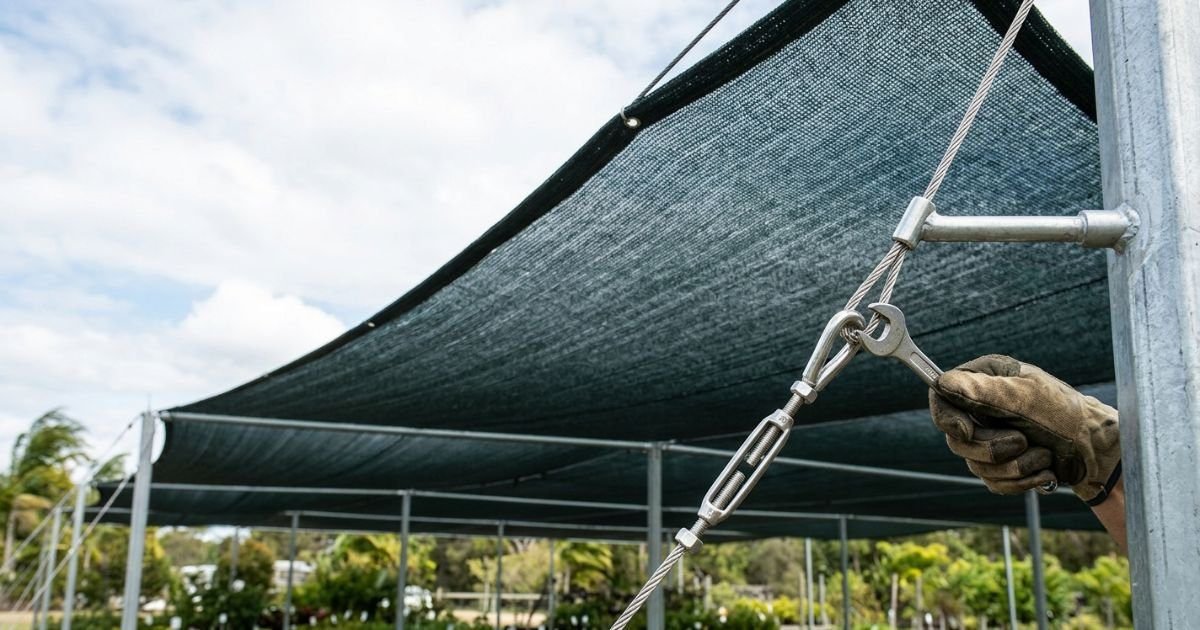
In the UAE, shade nets are constantly exposed to strong winds, high temperatures, and structural stress. While many focus on shade percentage or material, the real factor that determines lifespan is how well the net is tensioned and how it handles wind load.
Incorrect tensioning or ignoring wind dynamics can lead to:
- Sagging
- Tearing
- Structural failure
- Reduced lifespan
This guide explains wind load behaviour, proper tensioning techniques, and structural best practices to ensure your shade net lasts for years in harsh UAE conditions.
What is Wind Load in Shade Net Systems?
Wind load refers to the force exerted by wind on a surface. In shade nets, this force depends on:
- Wind speed
- Net density (shade %)
- Surface area
- Installation angle
Unlike solid materials, shade nets are permeable, allowing some air to pass through. However, higher shade percentages increase wind resistance, which increases the load on the structure.
Why Wind Load Matters in UAE Conditions?
In the UAE:
- Sudden gusts and sandstorms are common
- Open areas experience higher wind pressure
- High temperatures weaken poorly installed systems
Even a strong shade net can fail if the wind load is not properly managed.
How Shade Percentage Affects Wind Load?
| Shade % | Wind Resistance | Risk Level |
| 30-50% | Low | Safe |
| 60-70% | Moderate | Manageable |
| 80-95% | High | Requires strong tensioning |
Higher density = more wind pressure → stronger structure required
Related guide: GSM vs Shade Percentage Guide
The Science of Proper Tensioning
Tensioning controls how the net distributes wind force.
Correct Tensioning:
- Even distribution across all sides
- Slight flexibility to absorb wind
- No loose or overly tight areas
Incorrect Tensioning:
- Loose → flapping and damage
- Over-tight → tearing under stress
The goal is balanced tension, not maximum tightness.
Recommended Tensioning Techniques
1. Use Tensioning Hardware
Essential tools:
- Turnbuckles
- Steel cables (GI wire)
- Heavy-duty clamps
These allow:
- Adjustable tension
- Long-term stability
2. Install in Sections for Large Areas
For large installations:
- Divide into smaller panels
- Reduce wind pressure on each section
This significantly reduces failure risk.
3. Maintain Edge Reinforcement
Edges take the highest load.
Use:
- Reinforced stitching
- Metal eyelets
- Double-layer borders
4. Allow Controlled Flexibility
A shade net should:
- Move slightly with the wind
- Not behave like a rigid surface
Flexibility = shock absorption.
Structural Design Tips for Wind Resistance
1. Proper Frame Design
- Use steel or aluminium structures
- Ensure deep anchoring
- Maintain proper height ratios
2. Installation Angle Matters
Flat installations:
- Trap wind → higher pressure
Angled installations:
- Deflect wind → lower pressure
Always design with a slight slope or angle.
3. Anchor Point Strength
Weak anchor points are the most common failure point.
Ensure:
- Strong wall mounts or poles
- Reinforced joints
- Corrosion-resistant materials
Common Wind-Related Installation Mistakes
- Large continuous surface without breaks
- No slope or airflow direction consideration
- Weak or low-quality fixings
- Over-tensioning the net
- Using high-density nets without structural support
Mistake guide: Shade Net Installation Mistakes
Best Practices for Long-Lasting Shade Nets
- Choose the right shade percentage
- Use high-quality monofilament nets
- Install with proper tension balance
- Reinforce edges and anchor points
- Design for airflow and wind direction
Maintenance for Wind Resistance
- Inspect after storms
- Retighten cables periodically
- Replace worn fixings
- Check for edge damage
Maintenance guide: How to Care for Shade Nets?
Final Thoughts: Build for Wind, Not Just Shade
In the UAE, a shade net is not just a fabric; it’s a structural system.
Ignoring wind load and tensioning leads to:
- Frequent repairs
- Higher costs
- Shorter lifespan
A well-designed and properly tensioned system ensures:
- Long-term durability
- Better performance
- Maximum return on investment
Frequently Asked Questions
How does wind affect shade nets?
Wind creates pressure that can cause sagging or tearing if not properly managed.
Should shade nets be tightly stretched?
No, they should have balanced tension with slight flexibility.
What is the best shade percentage for windy areas?
Lower percentages (50-70%) perform better in high-wind zones.
How can I make my shade net more wind-resistant?
Use proper tensioning, strong anchors, and divide large areas into sections.
Do all shade nets handle wind equally?
No, monofilament nets perform better due to their stronger structure.