Choosing the right shade net colour matters more than you think, especially in the UAE. Colour influences thermal comfort, light diffusion (important for plants), privacy, glare control and even the net’s long-term durability. This guide covers all common and specialist shade net colours used in Dubai, Abu Dhabi, Sharjah, and across the Emirates. It explains the science behind heat absorption and light transmission, and maps each colour to the best use cases in the UAE.
Why Colour Matters: The Science in a Sentence
Colour determines how much solar radiation is absorbed, reflected or transmitted. That affects the temperature under the net (thermal comfort), the quality and quantity of light that passes through (plant health), and privacy/visibility. In hot, sun-intense environments like Dubai, small colour choices translate into significant differences in performance.
Key physical concepts:
- Albedo: Fraction of incident solar energy reflected by the surface (higher = cooler).
- Absorptance: Portion of energy absorbed and converted to heat (higher = warmer).
- Light Transmission & Spectral Quality: The amount of PAR (photosynthetically active radiation) that passes through is critical for plants.
- Thermal Emissivity: How quickly a heated surface radiates heat away.
Quick Colour Cheat Sheet
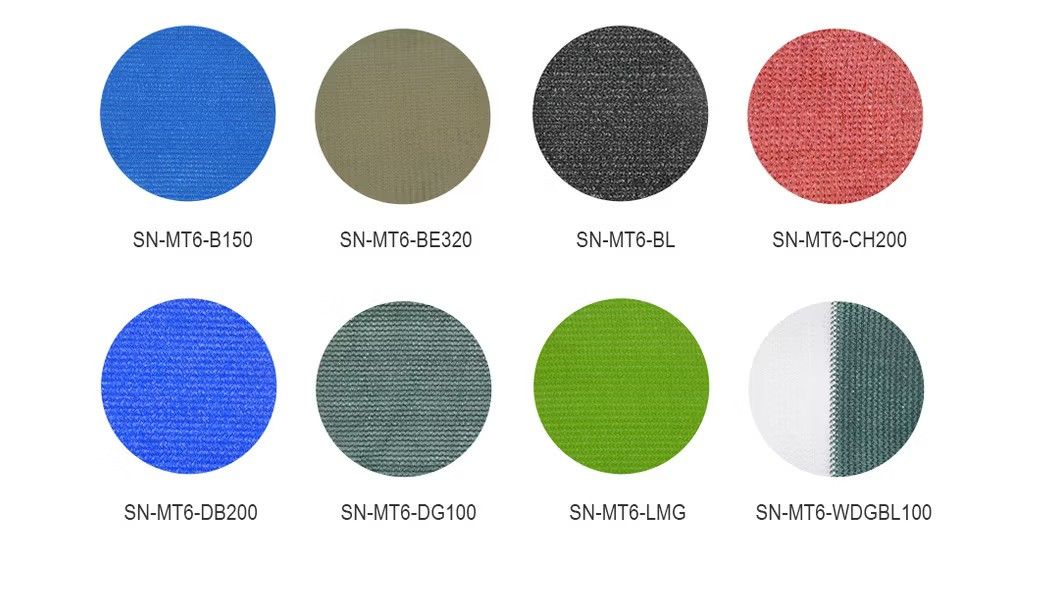
- Beige / Sand / Light Colours: Best cooling (high reflection), good for patios & hospitality.
- White / Translucent: Highest light transmission, used in greenhouses and nurseries.
- Green / Dark Green: Balanced: good for plants and landscape aesthetics.
- Black / Dark: Strongest privacy & UV blockage, absorbs heat best for parking/industrial.
- Grey / Brown: Neutral, durable-looking, good for industrial + landscape blend.
- Blue / Coloured (red, blue, custom): Niche uses: aesthetic choices, certain horticulture effects.
Colour-by-Colour Deep Dive (What You Need to Know)
1. Beige / Sand / Light Tones: The Cooling Specialists
Properties:
- High reflectance (high albedo) → lower heat absorption.
- Allows moderate to high light transmission depending on knit density.
- Show dirt more easily but keep areas cooler.
Best for:
Villas, patios, pool areas, outdoor dining, cafes, and hospitality venues in Dubai where comfort and aesthetics matter.
Plant Impact:
Provides bright, diffused light; suitable for shade-loving ornamentals and shaded leisure plants.
Notes:
Pair with medium GSM (180-220) for durability while maintaining cooling.
For shade percentage guidance, see: How to Choose the Right Shade % for Shade Nets in Dubai?
2. White / Translucent: Maximum Light Transmission; Greenhouse-Friendly
Properties:
- High light transmittance, especially in the visible spectrum.
- Reflects IR depending on finish; some white nets can still let through heat if made with thin yarns.
- Often used in horticulture where light quantity matters.
Best for:
Greenhouses, nurseries, and seedling areas where PAR is critical.
Plant Impact:
Promotes photosynthesis; reduces the risk of localised hot spots if knitted evenly.
Notes:
Use UV-stabilised white nets to prevent yellowing and premature degradation.
Read More: Shade Nets for Greenhouses & Gardens in Dubai
3. Green & Dark Green: The Garden Standard
Properties:
- Balanced light diffusion and moderate reflectance.
- Aesthetically blends with landscaping.
- Good compromise between plant needs and human comfort.
Best for:
Home gardens, landscape shading, public parks, and nursery benches.
Plant Impact:
Provides filtered light resembling a natural canopy, ideal for ornamentals and some vegetable varieties.
Notes:
Dark green performs slightly better on UV retention and hides dirt; light green allows a touch more light.
See Our Product: Monofilament Knitted Shade Net
4. Black & Very Dark Shades: Privacy & Maximum UV Block
Properties:
- High absorptance; low light transmission.
- Excellent at preventing visibility through the mesh and blocking sunlight.
- The under-area may feel significantly warmer.
Best for:
Car parks, industrial storage, construction site hoardings, and high-privacy fencing.
Plant Impact:
Not ideal for most plants because PAR is greatly reduced; suitable only for heat-tolerant or shade-specific crops.
Notes:
Use higher GSM (200-300) in hot, windy areas to counter increased material stress.
See Our Privacy fencing solutions
5. Grey & Brown: Neutral Industrial Aesthetics
Properties:
- Moderate reflectance; neutral look for built environments.
- Good at disguising dust and wear.
Best for:
Warehouses, storage yards, and architectural installations where a low-profile look is desired.
Plant Impact:
Similar to green but less ‘natural’ for plant environments.
6. Blue & Red: Niche & Horticultural Uses
Properties:
- Colour wavelengths affect perceived light and can influence plant morphology (some horticulture studies show blue/red ratios affect leaf and flowering behaviour).
- Mostly chosen for branding, play areas, or specific crop research.
Best for:
Aesthetic projects, playgrounds, branded event shading, and experimental horticulture.
Notes:
Consider spectral effects for sensitive crops; consult an agronomist if used for production.
7. Custom & Printed Colour Nets
Properties:
- Custom colours for branding (company colours, logos).
- Printing processes may slightly alter UV stability; always choose UV-treated prints.
Best for:
Commercial facades, branded awnings, and event canopies.
Colour vs Performance: Practical Selection Guide
- Comfort First (Patio, Pool, Cafes) → Beige / light tones + mid GSM + tighter knit for sun reflection.
- Plant-First (Nurseries, Greenhouses) → White or green + optimised shade % (50-70%) + UV-stable formulation.
- Privacy / Security (Parking, Boundary) → Black or dark grey + high GSM (≥200) + reinforced edging.
Technical Considerations When Selecting Colour (Don’t Forget These)
- Masterbatch & Pigment Type: Quality pigments with proper UV stabilisers ensure colourfastness and retention of physical properties.
- Heat vs Tensile Trade-Off: Darker colours absorb more heat, ensuring GSM and yarn type compensate with higher tensile strength.
- Light Spectrum for Plants: If shading crops, consider PAR transmission, not just visible light.
- Colourfastness Testing: Request accelerated UV ageing test data when buying large runs.
- Finish & Coating Compatibility: Some colours require different finishing (e.g., FR coating compatibility).
See More: HDPE Shade Net Manufacturing Process UAE
Colour Comparison Table
| Colour | Heat Absorption | Light Transmission | Privacy | Plant-Friendly | Typical GSM Range | Best UAE Uses |
| Beige / Sand | Low | High | Medium | Yes (ornamentals) | 150-220 | Villas, cafes, pools |
| White / Translucent | Low-Medium | Very High | Low | Excellent | 120-200 | Greenhouses, nurseries |
| Green / Dark Green | Medium | Medium | Low-Medium | Very Good | 120-250 | Gardens, nurseries |
| Black / Dark | High | Low | High | No (unless special) | 180-300 | Parking, industrial |
| Grey / Brown | Medium | Medium | Medium | Moderate | 150-250 | Warehouses, industrial |
| Blue/Red/Coloured | Variable | Variable | Low-Medium | Niche | 120-220 | Aesthetic projects |
Installation & Maintenance Tips Per Colour
- Light Colours: Show dirt schedule more frequent cleaning (every 2-3 months).
- Dark Colours: Retain heat, allow ventilation under the net and use higher GSM.
- Custom Printed Nets: Avoid heavy printing on structural areas (edges/eyelets) to prevent cracking.
For installation best practices, see: Shade Net Installation Checklist
Real-World Examples
- Restaurant Terrace (Dubai Marina): Beige two-tone canopy for cooler evenings + branded edge.
- Commercial Car Park (Sharjah): Black 90% shade monofilament net for durability and privacy.
- Nursery (Al Awir): White/translucent benches with 50-60% shade for seedling growth.
Need Help Choosing Colour & Fabric for your UAE Project?
If you’re unsure which colour and specification will work best, we can help: Exclusive Tarps supplies UV-stabilised HDPE shade nets in all colours, custom sizes and GSMs with professional fabrication, reinforcements and UAE-wide delivery.
Request a free site evaluation or quote: Contact Exclusive Tarps
Frequently Asked Questions
Which shade net colour stays coolest in Dubai?
Light colours like beige or white reflect more solar radiation and usually keep shaded areas cooler than darker colours.
Are coloured shade nets safe for growing plants?
Yes, green and white are best for most plants. If you use coloured nets (blue/red), consult a horticulturist because spectral changes can affect plant growth.
Do darker shade nets last longer?
Darker pigments often show better colourfastness, but longevity depends more on UV stabilisation and GSM than colour alone.
Should I choose black for privacy?
Yes, black provides the best privacy and light blocking, but expect higher heat under the net; choose high-GSM and reinforced edges.
What is an aluminised shade net, and when should I use it?
An aluminised net has a reflective finish that reduces radiant heat load suitable for rooftops, event canopies, and extremely exposed sites.
How often should I clean light-colour shade nets in Dubai?
Every 2-3 months is recommended to remove dust and sand; light colours show dirt faster and benefit more from regular cleaning.
Can I get custom colour shade nets for branding?
Yes. Exclusive Tarps provides custom-coloured and printed nets, but always uses UV-treated pigments to avoid premature fading.
Do colour choices affect fire-retardant performance?
No fire-retardant properties depend on chemical treatment and material construction, not colour. Always request FR certification for safety-critical installations.