HDPE tarpaulins are widely used across Dubai for construction, logistics, agriculture, and industrial protection because they provide a strong yet lightweight solution for harsh outdoor environments. Their woven structure offers durability, UV resistance, and cost-effective coverage compared with many heavy-duty alternatives.
In this guide, we explore HDPE tarpaulins in Dubai, including how they are manufactured, their key benefits, different types of HDPE tarps, industrial applications, GSM specifications, and how they compare with other materials like PVC and standard PE tarpaulins.
What is HDPE Tarpaulin?
HDPE (High-Density Polyethylene) tarpaulin is made from woven polyethylene fibres laminated with protective coatings. This construction creates a strong yet lightweight sheet capable of handling demanding outdoor conditions.
Compared to standard polyethylene tarps, HDPE offers:
- Higher tensile strength
- Better tear resistance
- Improved UV stability
- Greater durability in extreme climates
Because of these properties, HDPE tarpaulins are commonly used in construction sites, storage yards, logistics operations, and agricultural environments across Dubai and the UAE.
Key Benefits of HDPE Tarpaulins in Dubai
HDPE tarps are particularly well-suited for UAE conditions due to their balance of durability, flexibility, and affordability.
- Lightweight but Strong: HDPE tarpaulins have a high strength-to-weight ratio, making them easy to transport and install while still providing reliable protection.
- Excellent UV Resistance: Dubai’s intense sunlight can quickly degrade low-quality tarps. HDPE tarpaulins are typically UV-stabilised, helping them withstand prolonged outdoor exposure.
- Cost-Effective Protection: Compared with heavy-duty PVC tarpaulins, HDPE tarps offer a more economical option for large-scale coverage.
- Breathable Material Structure: The woven construction allows better airflow compared to fully sealed plastic sheets, helping reduce heat buildup and condensation.
- Easy Handling & Installation: Because HDPE tarpaulins are lightweight, they are easier to fold, transport, install and replace when necessary.
Why HDPE Tarpaulins Work Well in the Dubai Climate?
Dubai’s environment includes intense sunlight, dust storms, high temperatures, and occasional heavy rain. HDPE tarpaulins perform well in these conditions due to their UV-stabilised fibres and durable woven structure.
Businesses across Dubai commonly use HDPE tarps for construction sites, warehouse storage, cargo protection, and agricultural coverage because they provide reliable protection while remaining lightweight and easy to handle.
Types of HDPE Tarpaulins
HDPE tarps are manufactured in several variations depending on application requirements.
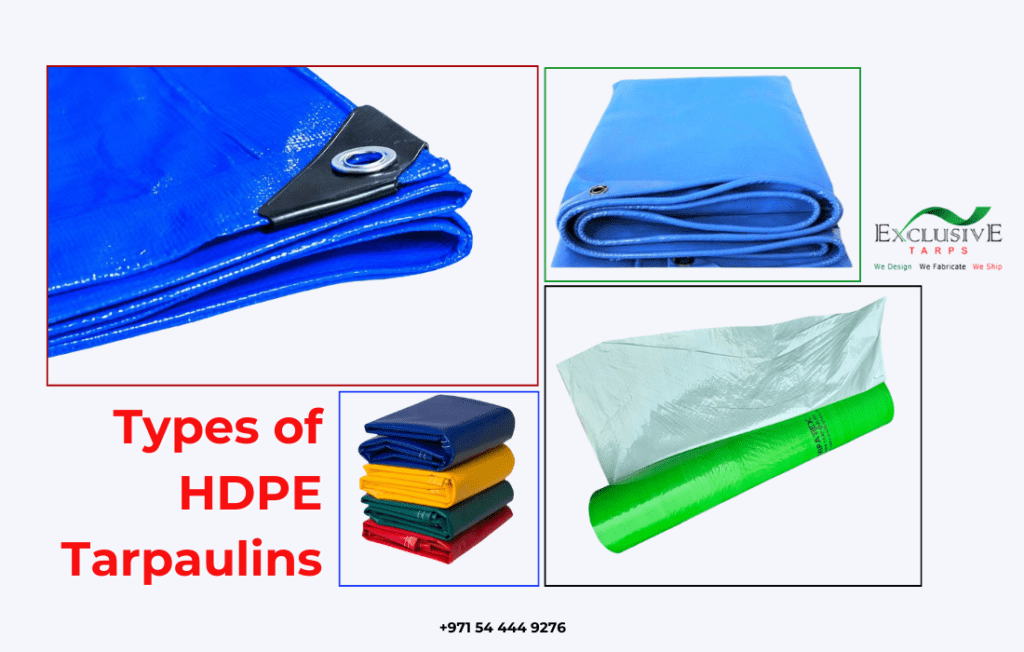
1. Woven HDPE Tarpaulins
These tarps are created by weaving HDPE fibres into a tight mesh.
Benefits include:
- High tear resistance
- Good airflow
- Lightweight design
Commonly used for:
- Construction site covers
- agriculture protection
- temporary shelters
2. Laminated HDPE Tarpaulins
These tarps include a laminated polyethylene layer that improves waterproofing.
Advantages:
- Better weather resistance
- Improved UV protection
- Longer outdoor lifespan
They are widely used for logistics, warehouse storage, and cargo protection.
3. Coated HDPE Tarpaulins
Coated HDPE tarps include an additional protective layer for enhanced durability.
These are suitable for:
- industrial equipment covers
- chemical storage protection
- heavy-duty outdoor applications
HDPE vs PE Tarpaulin: What’s the Difference?
Many buyers confuse HDPE and PE tarpaulins. While they are related materials, their performance differs.
| Feature | HDPE Tarpaulin | Standard PE Tarpaulin |
| Material Strength | Higher tensile & tear resistance | Standard strength |
| UV Stability | Excellent | Moderate |
| Weight Options (GSM) | 100-250 GSM | 90-200 GSM |
| Longevity | 2-3 years (heavy-duty use) | 1-2 years (light use) |
| Cost | Slightly higher | More budget-friendly |
HDPE is ideal for long-term, high-stress applications, while PE is great for short-term or lightweight usage.
HDPE vs PVC Tarpaulin: Which is Better for Dubai?
While HDPE tarpaulins are lightweight and cost-effective, PVC tarpaulins are designed for more demanding industrial environments.
HDPE Tarpaulin
- Lightweight and easy to install
- Cost-effective for extensive coverage
- Good UV resistance
- Suitable for temporary or medium-duty applications
PVC Tarpaulin
- 100% waterproof
- Higher tear strength
- Longer lifespan in extreme weather
- Ideal for heavy-duty industrial protection
For a deeper comparison of tarp materials, read our guide on PE vs PVC tarpaulin.
Common Applications of HDPE Tarpaulins in Dubai
HDPE tarpaulins are widely used across multiple industries.
1. Construction Sites
HDPE tarps are frequently used for:
- scaffolding covers
- dust protection
- material storage
These applications help maintain site safety and cleanliness. Our article on top uses of tarpaulins for warehouses & construction in Dubai explains these applications in more detail.
2. Warehousing & Storage
Warehouses use HDPE tarpaulins to cover:
- pallets
- machinery
- raw materials
- outdoor storage
Their lightweight structure makes them ideal for large coverage areas.
3. Agriculture
HDPE tarps are commonly used for:
- crop protection
- greenhouse shading
- ground covers
4. Transport & Logistics
Transport companies use HDPE tarpaulins for:
- truck covers
- cargo protection
- container coverings
HDPE Tarpaulin GSM & Technical Specifications
When selecting an HDPE tarp, GSM (grams per square meter) plays an important role.
Typical HDPE tarpaulin ranges include:
1. 100-150 GSM
- lightweight coverage
- temporary protection
2. 150-200 GSM
- medium-duty industrial use
- construction sites
3. 200-250 GSM
- heavy-duty outdoor applications
- long-term storage protection
These specifications help businesses select the right tarp depending on durability requirements.
Customisation Options for HDPE Tarpaulins
One of the biggest advantages of HDPE products is their adaptability. At Exclusive Tarps, we offer a range of customisation options, including:
- custom sizes
- colour options
- reinforced corners
- metal eyelets
- rope-reinforced edges
- logo printing
- uv stabilisation level
These customisations ensure our clients receive products that not only perform but also meet aesthetic and operational needs.
Our custom tarpaulins for Dubai businesses guide explains how custom tarps improve operational efficiency.
Maintenance Tips for HDPE Tarpaulins
To maximise the lifespan and performance of your HDPE tarpaulins, follow these simple maintenance tips:
- Regular Cleaning: Use mild soap and water to clean dirt and debris. Avoid harsh chemicals that might degrade the material.
- Proper Storage: When not in use, store tarpaulins in a cool, dry place to prevent unnecessary wear.
- Avoid Overstretching: Ensure tarpaulins are securely fastened but not overstretched to prevent tears.
- Inspect Regularly: Check for signs of wear or damage, especially near edges and fastenings, and address issues promptly.
You can also read our detailed guide on how to maintain tarpaulins in Dubai for additional maintenance tips.
Why HDPE Tarpaulins are a Sustainable Option?
HDPE tarps offer environmental benefits as well:
♻️ Fully Recyclable: Can be reprocessed into pipes, crates, and more.
♻️ Durability = Less Waste: Longer lifespan reduces replacement frequency.
♻️ Lower Carbon Impact: Lightweight design lowers transport energy.
These benefits make HDPE an environmentally responsible choice for many businesses.
Final Thoughts
HDPE tarpaulins are a practical and cost-effective protective solution for businesses across Dubai and the UAE. Their lightweight structure, strong woven fabric, UV resistance, and affordability make them ideal for construction, warehousing, logistics, and agricultural applications.
By selecting the right GSM level and maintaining the tarp properly, businesses can ensure reliable protection against Dubai’s challenging weather conditions.
Frequently Asked Questions
How long do HDPE tarpaulins last in Dubai?
With proper installation and maintenance, HDPE tarpaulins can typically last 2-3 years in outdoor conditions.
Are HDPE tarpaulins waterproof?
Most HDPE tarps are laminated with polyethylene layers, providing strong water resistance.
Are HDPE tarpaulins better than PVC tarpaulins?
HDPE tarps are lighter and more affordable, while PVC tarps offer higher durability and full waterproofing.
Can HDPE tarpaulins be used in marine environments?
Yes. They are resistant to salt spray and corrosion, making them suitable for coastal or offshore use.
What GSM HDPE tarpaulin is best for construction sites?
Construction sites commonly use 150-200 GSM HDPE tarpaulins for durability and weather protection.
Are HDPE tarps fire retardant?
Not by default. However, we offer fire-retardant HDPE tarpaulins on request.
Can HDPE tarpaulins be customised?
Yes. HDPE tarpaulins can be manufactured in custom sizes, colours, and reinforced designs to match specific business requirements.