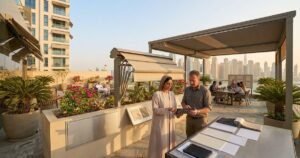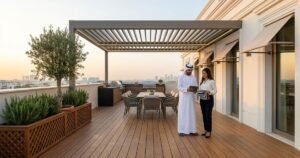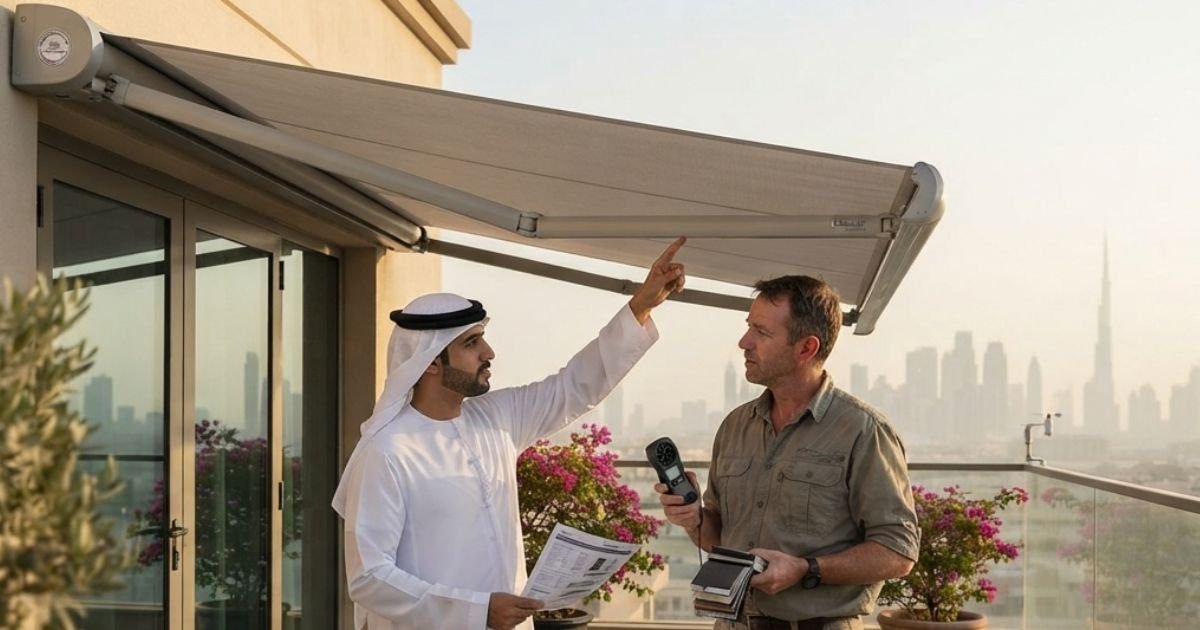
Choosing an awning for a property in Dubai requires more than selecting an attractive design. The UAE’s hot climate, intense sunlight, high UV exposure, dust and occasional strong winds mean that an awning needs to be selected according to local environmental conditions.
The right awning can transform a patio, balcony, terrace, restaurant or commercial outdoor area into a more comfortable and usable space. However, choosing the wrong fabric, frame, size or operating system can affect performance, durability and maintenance requirements.
So, what is the best awning for Dubai’s climate?
The answer depends on several factors, including the location of the installation, the level of sun exposure, the required shade coverage, fabric performance, frame construction and whether the awning will be used for residential or commercial purposes.
This guide explains the most important factors to consider when choosing an awning for Dubai and the wider UAE.
Understanding Dubai’s Climate Before Choosing an Awning
Dubai has a predominantly hot desert climate with long, extremely warm summers and high levels of sunshine throughout much of the year.
For awning installations, some of the most important environmental considerations include:
- Intense direct sunlight
- High UV exposure
- High outdoor temperatures
- Heat gain through windows and doors
- Dust and sand
- Occasional rain
- Strong winds during certain weather conditions
These factors mean that an awning installed in Dubai needs to be more than a decorative addition to a building.
The fabric, frame and mechanical components should all be suitable for outdoor use and selected according to the property’s specific requirements.
1. Choose an Awning Fabric Designed for Strong Sunlight
Fabric is one of the most important components of an awning.
In Dubai, prolonged exposure to intense sunlight can affect lower-quality outdoor fabrics, potentially causing fading, deterioration and reduced performance over time.
When selecting an awning, look for fabrics with:
- Strong UV resistance
- Good colour retention
- High durability
- Resistance to outdoor exposure
- Easy maintenance
- Suitable water resistance
Premium outdoor fabrics are generally better suited to demanding climates because they are designed to maintain their appearance and performance for longer.
The right fabric should also be selected according to the intended application. For example, a residential patio may have different requirements from a busy restaurant terrace.
2. Consider UV Protection
UV protection should be a major consideration when choosing an awning in Dubai.
A well-designed awning can help reduce direct exposure to sunlight in outdoor areas while also providing shade for people and protecting furniture and other items from prolonged sun exposure.
For homes, this can make balconies, patios and terraces more comfortable.
For businesses, effective shade can improve the experience of customers using outdoor seating areas.
When comparing awning fabrics, ask the supplier about the fabric’s UV performance and suitability for prolonged outdoor exposure.
3. Choose a Corrosion-Resistant Frame
The awning fabric is only one part of the system. The supporting frame and mechanical components are equally important.
Aluminium is widely used in high-quality awning systems because it offers several advantages:
- Lightweight construction
- Good structural performance
- Corrosion resistance
- Low maintenance
- Suitable for outdoor applications
For Dubai properties, choosing a durable, corrosion-resistant frame can help reduce maintenance requirements and support long-term performance.
The frame finish should also be appropriate for outdoor exposure.
4. Consider the Awning’s Wind Performance
Although Dubai is known for its hot and sunny weather, wind should not be overlooked when choosing an awning.
Wind performance depends on factors such as:
- Awning size
- Projection
- Installation height
- Building orientation
- Fixing method
- Awning design
- Local exposure conditions
Retractable awnings can be retracted when weather conditions become unsuitable, providing an additional level of flexibility.
For larger commercial installations, professional assessment and correct anchoring are particularly important.
It is also worth asking your awning supplier about the operating recommendations for the specific system you are considering.
5. Choose the Right Awning Type
Different awning designs are suited to different applications.
Understanding the main awning types can help you narrow down your options.
If you want to compare the different systems available, read our guide to different types of awnings to understand how retractable, cassette, fixed and freestanding systems differ.
– Retractable Awnings
Retractable awnings are a practical option for properties that require flexible shade.
They can be extended during sunny periods and retracted when shade is not required.
They are suitable for:
- Villa patios
- Balconies
- Terraces
- Restaurants
- Cafés
Their flexibility makes them a popular choice for Dubai’s variable outdoor conditions.
– Cassette Awnings
Cassette awnings provide additional protection for the fabric and mechanical components when the awning is retracted.
This can be particularly useful in environments where dust and outdoor exposure are concerns.
For example, the STORBOX 250 cassette awning offers a compact and enclosed design that can suit residential and commercial applications where aesthetics and component protection are important.
– Freestanding and Double-Sided Awnings
When wall mounting is not practical, a freestanding system can provide shade in open areas.
The DUOX freestanding double-sided awning is an example of a system designed to provide shade on both sides of a central structure.
These systems can be suitable for:
- Gardens
- Outdoor dining
- Hospitality spaces
- Large terraces
- Open commercial areas
– Heavy-Duty Awnings
For demanding commercial applications, a stronger awning system may be required.
The ART MONOBLOC 350 is a heavy-duty awning solution that can be considered for applications where robust construction and reliable outdoor shading are priorities.
6. Think About Your Property’s Orientation
The direction your property faces can significantly influence how much direct sunlight it receives.
Before installing an awning, consider:
- Where the sun is strongest during the day
- Which windows receive direct sunlight
- The position of your patio or terrace
- The direction of outdoor seating
- Seasonal changes in sun position
An awning that is correctly positioned can provide more effective shade than simply choosing the largest available system.
Professional site assessment can help determine the best installation position and projection.
7. Select the Correct Awning Size and Projection
An awning should be correctly sized for the area it is intended to protect.
Important measurements include:
- Width
- Projection
- Installation height
- Available wall space
- Required shade coverage
A larger awning is not automatically a better awning.
The correct size should provide sufficient shade while remaining structurally appropriate for the installation location.
For commercial properties, the size should also reflect the number of people expected to use the shaded area.
8. Consider Waterproofing and Rain Protection
Although Dubai has a predominantly dry climate, rain does occur, particularly during certain periods of the year.
If occasional rain protection is important, consider the fabric’s water resistance and the awning’s design.
However, it is important to understand the difference between:
- Water-resistant fabrics
- Waterproof fabrics
- Systems designed primarily for sun protection
Not every awning is designed to provide complete protection during heavy rainfall.
Always discuss your requirements with the supplier before choosing a system.
9. Decide Between Manual and Motorised Operation
Your preferred operating system should depend on the size, location and frequency of use.
– Manual Awnings
Manual systems can be suitable for smaller installations where the awning is operated occasionally.
They offer:
- Simple operation
- Lower mechanical complexity
- Straightforward maintenance
– Motorised Awnings
Motorised systems provide greater convenience, especially for larger installations.
They are particularly useful for:
- Large patios
- Villa terraces
- Restaurants
- Commercial outdoor seating
- Frequently used awnings
Depending on the system, motorised operation can also be integrated with sensors and automated controls.
10. Consider Dust and Maintenance
Dubai’s dusty environment means that regular cleaning and maintenance should be part of your awning ownership plan.
Dust can accumulate on:
- Awning fabrics
- Frames
- Mechanical components
- Cassette housings
A well-maintained awning is more likely to retain its appearance and perform effectively over its service life.
Before purchasing, ask about:
- Recommended cleaning methods
- Fabric care requirements
- Maintenance intervals
- Spare parts availability
- Professional servicing
Selecting an awning system with accessible maintenance support can make long-term ownership easier.
11. Match the Awning to Your Property
The best awning for a Dubai property is not necessarily the most expensive or largest system.
Your choice should reflect how and where the awning will be used.
– For Villas
Retractable and cassette awnings are suitable for:
- Patios
- Balconies
- Terraces
- Garden seating
– For Restaurants and Cafés
Commercial retractable or larger shading systems can help create comfortable outdoor dining areas.
– For Retail Shops
Awnings can provide shade at entrances while also contributing to the visual identity of the business.
– For Hotels and Hospitality Properties
Freestanding and larger commercial systems can help create attractive outdoor spaces for guests.
12. Why Professional Awning Installation Matters in Dubai
Even a high-quality awning can underperform if it is poorly installed.
Professional installation helps ensure:
- Correct fixing points
- Proper alignment
- Suitable wall anchoring
- Correct fabric tension
- Safe operation
- Appropriate projection
- Better long-term performance
Installation requirements can vary depending on the building structure and awning model.
This is particularly important for larger systems and commercial projects.
A professional awning supplier should assess the installation area before recommending the final solution.
What is the Best Awning for Dubai’s Climate?
There is no single awning that is perfect for every property.
However, the best awning for Dubai should generally combine:
- High-quality outdoor fabric
- Strong UV resistance
- Suitable weather performance
- Corrosion-resistant frame
- Appropriate wind considerations
- Correct sizing
- Professional installation
- Easy maintenance
For a residential patio, a retractable or cassette system may provide the right combination of flexibility and aesthetics.
For larger open areas, a freestanding system such as the DUOX may be more appropriate.
For demanding commercial applications, a heavy-duty system such as the ART MONOBLOC 350 may be worth considering.
The key is to select an awning based on the specific location and intended use rather than choosing a system based solely on appearance.
Why Choose Exclusive Tarps for Awnings in Dubai?
Choosing the right awning is easier when you work with an experienced supplier that understands local conditions and installation requirements.
Exclusive Tarps provides awning solutions for residential and commercial properties in Dubai and across the UAE, including supply, custom fabrication and professional installation.
Our awning solutions include premium Llaza systems, with options suitable for different property types and outdoor applications.
Whether you need an awning for a villa patio, a restaurant terrace, a retail entrance or a larger commercial space, the right system can be selected according to your property’s requirements.
Conclusion
Choosing the best awning for Dubai’s climate requires careful consideration of more than just appearance.
The fabric should be suitable for intense sunlight and UV exposure, the frame should be durable and corrosion-resistant, and the system should be appropriately sized and installed for its intended application.
You should also consider wind exposure, dust, maintenance, operating method and the level of weather protection required.
By choosing a high-quality awning system and having it professionally installed, homeowners and businesses can create more comfortable, functional and attractive outdoor spaces throughout Dubai and the UAE.
The best approach is to assess your property first and then select an awning that matches its specific environmental and practical requirements.
Frequently Asked Questions
What is the best type of awning for Dubai's hot weather?
Retractable and cassette awnings with high-quality UV-resistant outdoor fabrics are popular choices for Dubai's climate. The best option depends on the property's location, required shade coverage and intended use.
What should I look for when buying an awning in Dubai?
Look for UV-resistant fabric, durable construction, corrosion-resistant frames, suitable wind performance, correct sizing and professional installation. The awning should also be appropriate for the specific application.
Are awnings suitable for Dubai's strong sunlight?
Yes. Quality awnings can provide effective shade and help reduce direct sunlight in outdoor areas. Selecting a fabric designed for prolonged UV exposure is important for long-term performance.
Can awnings withstand wind in Dubai?
Awning wind performance depends on the specific model, size, installation and site conditions. Retractable awnings can generally be retracted when conditions are unsuitable. Always follow the manufacturer's operating recommendations.
Are awnings waterproof?
Some awning fabrics offer water-resistant or waterproof properties, but not every awning is designed for complete rain protection. If rain protection is important, discuss the fabric and system specifications with your supplier before purchasing.
Are motorised awnings better for Dubai properties?
Motorised awnings can be more convenient for large or frequently used installations. They are particularly suitable for villas, restaurants and commercial outdoor spaces where regular operation is required.
How long can an awning last in Dubai?
The lifespan of an awning depends on the quality of the fabric and frame, installation, frequency of use, maintenance and exposure to environmental conditions. High-quality materials and regular maintenance can help extend its service life.
Do awnings help reduce heat inside a building?
Awnings can help reduce direct solar exposure through windows and doors, potentially reducing solar heat gain. Their effectiveness depends on factors such as the building's orientation, window design, awning projection and local sun exposure.