Not all tents are designed for the same purpose. One of the most common mistakes buyers make is assuming that camping tents and commercial tents only differ in size. In reality, these structures are built for completely different environments, usage requirements, and performance expectations.
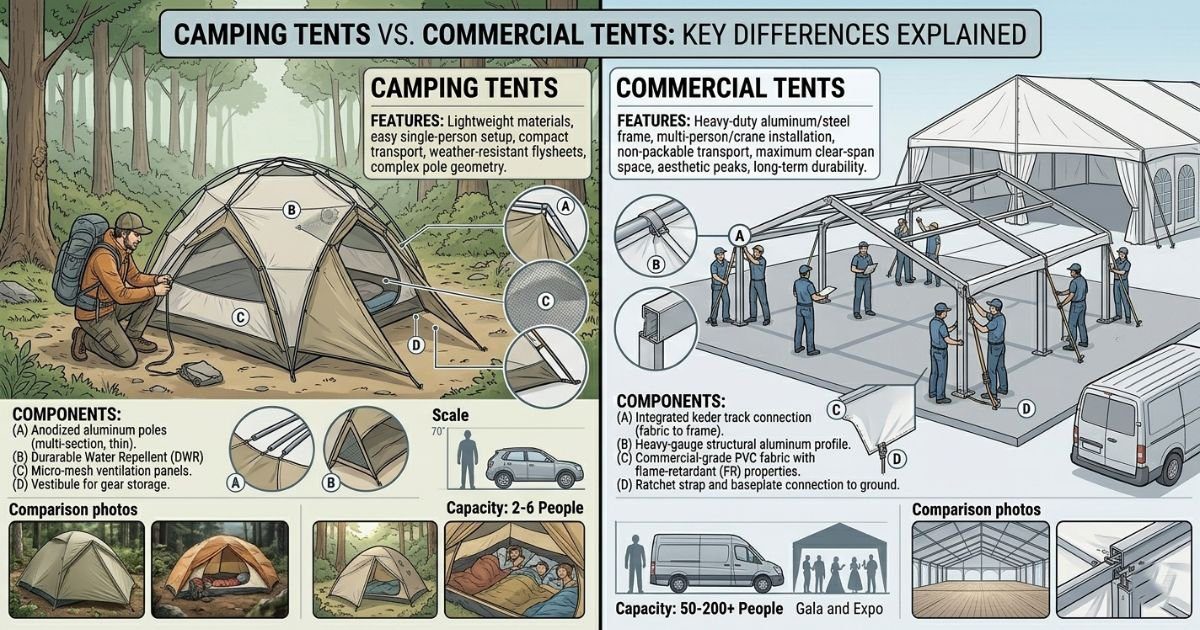
Camping tents are generally designed for portability, temporary use, and lightweight outdoor activities. Commercial tents, on the other hand, are engineered for durability, larger coverage areas, and long-term operational use. Choosing the wrong type can lead to reduced performance, higher maintenance costs, and shorter lifespan.
In this guide, we will compare camping tents and commercial tents in terms of materials, structure, durability, weather resistance, and applications so you can better understand which option suits your needs.
At Exclusive Tarps, we focus on custom commercial and industrial tent solutions designed for demanding UAE environments and business applications.
What are Camping Tents?
Camping tents are lightweight shelters primarily designed for recreational outdoor use.
They are commonly used for:
- Camping trips
- Hiking activities
- Temporary outdoor stays
- Leisure activities
Camping tents usually prioritise:
- Portability
- Fast installation
- Lightweight materials
- Compact storage
They are designed for short-term use rather than continuous heavy-duty operation.
What are Commercial Tents?
Commercial tents are larger and stronger structures designed for operational or business applications.
They are commonly used for:
- Events
- Warehouses
- Construction sites
- Industrial operations
- Outdoor commercial spaces
Commercial tents prioritise:
- Structural strength
- Long-term durability
- Weather resistance
- Large space coverage
You can also read: Top Uses of Commercial Tents in Dubai
Material Differences
One of the biggest differences between the two tent types is the material.
1. Camping Tent Materials
Camping tents are commonly used:
- Polyester
- Nylon
- Lightweight coated fabrics
Advantages include:
- Lower weight
- Easier transportation
- Faster setup
However, these materials may not perform well under continuous harsh weather exposure.
2. Commercial Tent Materials
Commercial tents are usually used:
- PVC-coated fabrics
- Heavy-duty canvas materials
- Reinforced structural fabrics
Advantages include:
- Better durability
- Improved waterproofing
- Strong UV resistance
- Better long-term performance
For a complete material comparison, read: Best Tent Materials Explained
Structural Differences
Camping tents are generally used:
- Lightweight poles
- Compact support systems
- Portable designs
Commercial tents typically include:
- Aluminium frames
- Steel structures
- Heavy-duty support systems
Commercial structures are built to withstand larger loads and harsh outdoor conditions.
If you want a frame comparison, you can also read: Aluminium Frame Tents vs Steel Tents: Which is More Durable?
Durability Comparison
Durability requirements differ significantly.
1. Camping Tents
Camping tents are usually intended for:
- Short-term use
- Occasional outdoor exposure
- Temporary installations
2. Commercial Tents
Commercial tents are built for:
- Continuous use
- Heavy operational demands
- Long-term installations
Because of stronger materials and structural systems, commercial tents generally provide a significantly longer lifespan.
You can also read: How Long Do Tents Last?
Weather Resistance Comparison
Weather conditions in Dubai create serious challenges for outdoor structures.
1. Camping Tents
Camping tents may provide:
- Basic rain protection
- Limited UV resistance
- Moderate wind protection
However, many lightweight camping tents are not designed for harsh, long-term weather exposure.
2. Commercial Tents
Commercial tents commonly include:
- UV-resistant materials
- Waterproof coatings
- Wind-resistant structures
These features improve performance under harsh conditions.
Related guides:
- UV-Resistant Tents: Why They Matter in the Dubai Climate?
- What Makes a Tent Waterproof?
- Wind-Resistant Tents: How to Choose Tents for Harsh Weather?
Size and Space Differences
Camping tents are usually compact and designed for limited occupancy.
Commercial tents can support:
- Large crowds
- Equipment storage
- Operational workspaces
- Event setups
Space requirements often determine which category is appropriate.
If you need sizing guidance, you can also read: How to Choose the Right Tent Size for Your Event or Business?
Maintenance Requirements
Camping tents generally require:
- Basic cleaning
- Proper drying after use
- Compact storage practices
Commercial tents often involve:
- Scheduled inspections
- Structural checks
- Larger maintenance routines
You can also explore:
Which One Should You Choose?
Choose camping tents if you need:
- Lightweight portability
- Temporary outdoor use
- Recreational shelter solutions
Choose commercial tents if you need:
- Large coverage areas
- Long-term outdoor use
- Weather resistance
- Operational functionality
Businesses often benefit more from commercial tents because they provide stronger performance and long-term value.
Why Choose Exclusive Tarps for Commercial Tent Solutions?
At Exclusive Tarps, we provide durable commercial and industrial tent solutions designed specifically for UAE conditions.
We offer:
- Event tents
- Industrial tents
- Warehouse structures
- Custom tent solutions
- High-quality weather-resistant materials
Our focus is on delivering practical and reliable solutions based on real operational requirements.
Final Thoughts
Camping tents and commercial tents serve very different purposes. While camping tents focus on portability and temporary use, commercial tents are designed for durability, larger spaces, and long-term outdoor performance.
Understanding these differences helps buyers avoid selecting the wrong type of tent and ensures better performance, functionality, and value.
Frequently Asked Questions
What is the difference between camping tents and commercial tents?
Camping tents are designed for portable recreational use, while commercial tents are built for larger and long-term applications.
Are commercial tents more durable than camping tents?
Yes, commercial tents generally use stronger materials and structural systems.
Can camping tents handle Dubai's weather?
Camping tents may work for short-term use, but often lack the durability required for continuous harsh conditions.
Which material is commonly used for commercial tents?
PVC-coated materials are widely used because of their durability and weather resistance.
Do commercial tents require more maintenance?
Yes, larger commercial structures typically require scheduled inspections and maintenance.