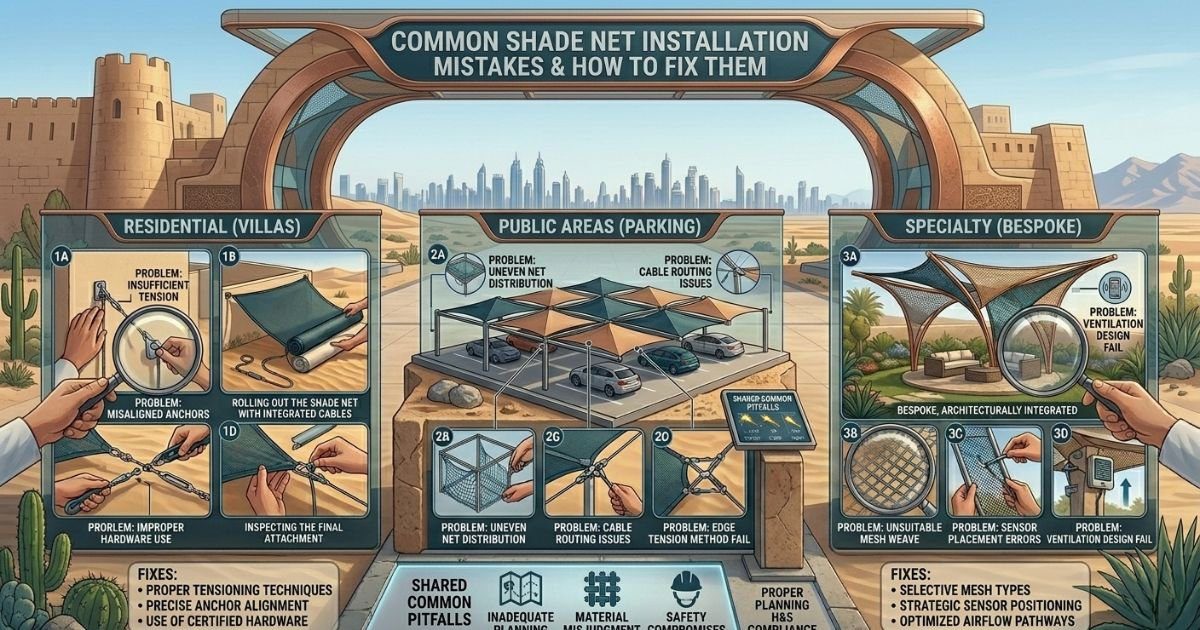
Installing a shade net may look simple, but in UAE conditions where heat, UV exposure, wind, and dust are extreme, even small mistakes can lead to sagging, tearing, poor cooling, and reduced lifespan.
Many installations fail not because of material quality, but due to incorrect installation techniques, poor planning, or weak structural support.
This guide highlights the most common shade net installation mistakes and explains how to fix and prevent them, ensuring your shading system performs efficiently for years.
Why Installation Mistakes are a Big Problem in the UAE?
In high-temperature environments like the UAE:
- Strong winds increase structural stress
- UV rays weaken poorly installed nets faster
- Dust buildup affects airflow
- Heat amplifies fabric tension issues
A small mistake can reduce lifespan by 50% or more.
1. Loose Installation (Sagging Shade Net)
Problem
The net hangs loosely, creating sagging areas.
Why It Happens
- Poor tensioning
- Weak support points
- Improper installation technique
Impact
- Reduced cooling efficiency
- Increased wind damage
- Faster wear and tear
Fix
- Use turnbuckles or tensioners
- Tighten evenly from all sides
- Reinforce anchor points
2. Over-Tensioning the Shade Net
Problem
The net is stretched too tightly.
Why It Happens
- Misunderstanding of tension balance
- Trying to avoid sagging
Impact
- Fabric stress and tearing
- Reduced flexibility under wind
Fix
- Maintain balanced tension (not extreme tightness)
- Allow slight flexibility for movement
3. Weak or Improper Fixings
Problem
Using low-quality ropes, hooks, or fasteners.
Why It Happens
- Cost-cutting
- Incorrect material selection
Impact
- Sudden failure under wind load
- Safety risks
Fix
- Use GI wire, steel cables, and heavy-duty clamps
- Inspect fixings regularly
4. Ignoring Wind Direction & Load
Problem
Installation does not consider wind flow.
Why It Happens
- No site assessment
- Poor planning
Impact
- Tearing or detachment
- Structural damage
Fix
- Install with the wind flow direction in mind
- Use reinforced edges for exposed areas
5. No Slope for Water Drainage
Problem
Flat installation causes water accumulation.
Why It Happens
- Incorrect structural design
Impact
- Water pooling
- Fabric stress and sagging
Fix
- Maintain a slight slope (minimum 5-10%)
- Ensure proper drainage path
6. Choosing the Wrong Shade Net Material
Problem
Using low-quality or incorrect material.
Why It Happens
- Lack of knowledge
- Budget-focused decisions
Impact
- Poor durability
- Reduced UV protection
Fix
- Use HDPE monofilament shade nets for long-term use
Material guide: HDPE Monofilament vs Tape Yarn Shade Nets
7. Incorrect Shade Percentage Selection
Problem
Choosing too high or too low a shade percentage.
Impact
- Too dark → poor airflow & visibility
- Too light → insufficient cooling
Fix
- Select based on application:
- 50-60% → gardens
- 70-90% → parking, commercial
Related read: How to Choose the Right Shade Percentage for Shade Nets?
8. Poor Edge Reinforcement
Problem
Edges tear or loosen first.
Why It Happens
- No reinforced stitching
- Weak finishing
Impact
- Early failure
- Reduced lifespan
Fix
- Use nets with reinforced borders and eyelets
9. DIY Installation for Large Projects
Problem
Attempting large installations without expertise.
Impact
- Structural imbalance
- Safety risks
Fix
- Use professional installation for large areas
10. Ignoring Maintenance After Installation
Problem
No regular inspection or cleaning.
Impact
- Dust buildup
- Reduced airflow
- Faster degradation
Fix
- Clean every 2-3 months
- Check tension regularly
Maintenance guide: How to Care for Shade Nets?
Quick Fix Checklist
- Proper tension (not too loose or tight)
- Strong fixings and cables
- Wind-aware installation
- Correct slope for drainage
- High-quality material
- Regular maintenance
Final Thoughts: Avoid Mistakes, Maximise Performance
Most shade net failures are installation-related, not material-related.
By avoiding these common mistakes, you can:
- Extend lifespan by years
- Improve cooling efficiency
- Reduce repair costs
- Ensure structural safety
For best results, combine high-quality materials + expert installation practices.
Frequently Asked Questions
What is the most common shade net installation mistake?
Loose or uneven tensioning is the most common issue.
Can I fix a sagging shade net?
Yes, by re-tensioning and reinforcing anchor points.
Should shade nets be tightly stretched?
No, they should have balanced tension with slight flexibility.
Why does my shade net tear quickly?
Usually due to poor installation or low-quality fixings.
How often should I inspect the installation?
Every 2-3 months, especially in high-wind areas.