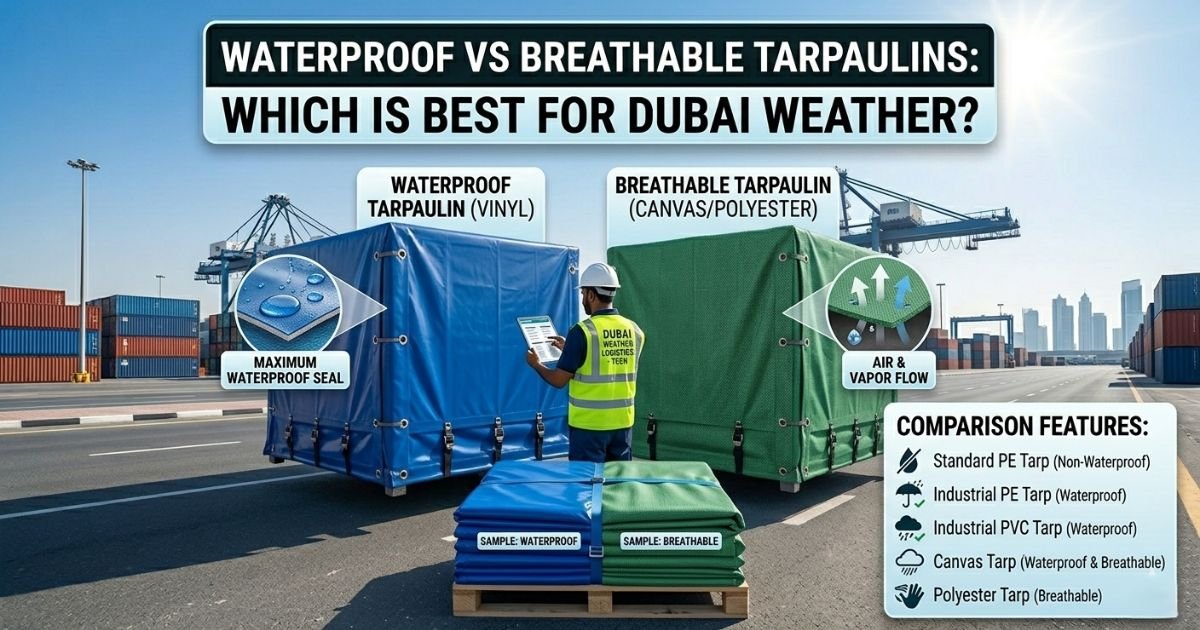
Tarpaulins are widely used across Dubai for construction sites, transportation, storage protection, and outdoor events. However, choosing the right type of tarpaulin often depends on one important factor: whether the tarp should be waterproof or breathable.
Both options provide valuable protection but serve different purposes. Waterproof tarpaulins offer complete protection from rain and moisture, while breathable tarpaulins allow airflow and help prevent heat buildup.
In this guide, we compare waterproof vs breathable tarpaulins, explain their advantages, and help you determine which option is best suited for Dubai’s hot and dusty climate.
Understanding Waterproof Tarpaulins
Waterproof tarpaulins are designed to block water penetration completely. These tarps are coated or laminated with materials that create a sealed barrier against moisture.
Waterproof tarps are commonly manufactured using:
- PVC-coated polyester fabrics
- Polyethylene (PE) laminated sheets
- Heavy-duty industrial tarpaulin materials
These tarps are widely used where full protection from rain or liquid exposure is required.
Advantages of Waterproof Tarpaulins
Waterproof tarps offer several benefits in demanding environments.
1. Full Rain Protection
They prevent water from reaching the covered equipment or materials, making them ideal for outdoor storage and cargo protection.
2. Strong Weather Resistance
High-quality waterproof tarpaulins protect against:
- Rain
- Dust
- UV exposure
- Wind
3. Durability
Many waterproof tarps, especially PVC tarpaulins, are designed for heavy-duty industrial use.
Common Uses of Waterproof Tarpaulins
Waterproof tarpaulins are commonly used for:
- Truck and cargo covers
- Construction site protection
- Outdoor machinery covers
- Warehouse storage protection
- Temporary roofing
For transport-related applications, you may also explore Truck & Cargo Tarpaulins in Dubai.
Understanding Breathable Tarpaulins
Breathable tarpaulins allow air circulation through the material, which helps reduce moisture buildup and heat accumulation under the cover.
Unlike waterproof tarps, breathable tarps do not completely seal off airflow.
These tarps are commonly made from:
- Canvas fabric
- HDPE mesh materials
- Shade net fabrics
Breathable tarps are particularly useful in hot climates where airflow is important.
For example, canvas tarpaulins are widely used for shade applications.
Advantages of Breathable Tarpaulins
Breathable tarps offer several unique advantages.
1. Reduced Heat Buildup
Airflow helps prevent trapped heat, which is particularly important in Dubai’s high temperatures.
2. Moisture Control
Breathable materials reduce condensation, helping protect equipment and stored goods.
3. Better Air Circulation
These tarps are often used for shade structures and ventilation-sensitive applications.
HDPE-based tarps are a popular breathable option for industrial coverage. You can read more about HDPE Tarpaulins in Dubai.
Waterproof vs Breathable Tarpaulins: Key Differences
Understanding the differences helps businesses choose the right protection.
| Feature | Waterproof Tarpaulins | Breathable Tarpaulins |
| Water protection | Fully waterproof | Not fully waterproof |
| Airflow | No airflow | Allows air circulation |
| Heat buildup | Higher | Lower |
| Condensation | Possible | Reduced |
| Common materials | PVC, laminated PE | Canvas, HDPE mesh |
Each type serves different applications depending on environmental conditions and protection requirements.
Which Tarpaulin is Best for Dubai Weather?
Dubai’s climate includes intense sunlight, high temperatures, and dusty conditions. The ideal tarpaulin depends on the application.
1. When to Choose Waterproof Tarpaulins
Waterproof tarps are best for:
- Cargo transportation
- Construction equipment protection
- Outdoor machinery covers
- Storage protection during rain
For industrial environments, you can also read industrial tarpaulins vs standard tarpaulins.
2. When to Choose Breathable Tarpaulins
Breathable tarps are ideal for:
- Shade structures
- Outdoor seating areas
- Ventilation-sensitive storage
- Temporary event covers
These applications benefit from improved airflow and reduced heat buildup.
For more event-related uses, see tarpaulins for events & outdoor activities in Dubai.
Factors to Consider Before Choosing a Tarpaulin
When selecting between waterproof and breathable tarpaulins, consider:
- Environmental exposure
- Need for moisture protection
- Heat buildup under the tarp
- Required durability
- Material type and GSM thickness
If you want to understand how tarpaulin thickness affects strength and durability, our tarpaulin GSM & thickness guide explains how GSM levels impact performance.
Frequently Asked Questions
What is the difference between waterproof and breathable tarpaulins?
Waterproof tarpaulins completely block water penetration, while breathable tarpaulins allow airflow and help reduce heat buildup.
Are breathable tarpaulins waterproof?
No. Breathable tarps allow air circulation and are not fully waterproof.
Which tarpaulin is better for the Dubai weather?
Both types can be useful depending on the application. Waterproof tarps protect against rain and moisture, while breathable tarps help reduce heat buildup.
Are PVC tarpaulins waterproof?
Yes. PVC tarpaulins are fully waterproof and commonly used for industrial and transport applications.
Are canvas tarpaulins breathable?
Yes. Canvas tarpaulins allow airflow and are commonly used for shade structures and ventilation-sensitive applications.